Source Semi-Closed Air Cooling Condensing Unit for Freezing, Chilling, and Cold Storage
Compare 30 semi-closed air cooling condensing unit options from verified Chinese manufacturers. Buyers can evaluate specifications like cooling systems, refrigerant types, and customization availability for seafood, frozen food, and vegetable applications.
Key considerations
Products List


$500.00 - $575.00
MOQ: 1 Pieces


Cold Room Condenser Unit Air Cooled Condensing Unit Refrigeration Unit
$1000.00 - $12000.00
MOQ: 1 Pieces


Compact Design Air Cooled Condensing Unit with Maximum Cooling Efficiency
$1000.00 - $6000.00
MOQ: 1 Pieces

Cool Room Equipment for Sale Condensing Unit Prices Condensing Units
$1000.00 - $10000.00
MOQ: 1 Pieces


Air Conditioning Condensing Unit Air-Cooled Cooling Unit Freezing Equipment
$3000.00 - $3500.00
MOQ: 1 Pieces


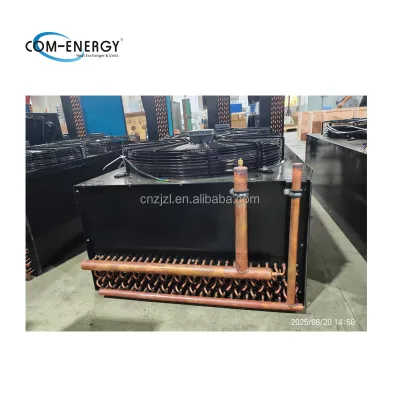

Condensing Unit Cooler Air Cooled Condensing Unit for Cold Storage Room
$100.00 - $10000000.00
MOQ: 1 Pieces


Air Cooled Compressor Condensing Unit for Cooling System Refrigeration
$5600.00 - $55000.00
MOQ: 1 Sets


Reliable Semi-Hermetic Condensing Unit for Industrial Cooling Solutions
$5600.00 - $55000.00
MOQ: 1 Sets


Comprehensive Sourcing Guide
Strategic Sourcing Guide for Semi-Closed Air Cooling Condensing Units
Understanding Core Technical Specifications and Configuration
When sourcing a semi-closed air cooling condensing unit, buyers must first establish a precise understanding of the mechanical architecture that defines this equipment class. The semi-closed structure is a critical differentiator, offering a balance between the accessibility of open compressors and the sealed efficiency of hermetic units. In the current market, observed configurations frequently utilize a balanced opposed arrangement for cylinders, which significantly reduces vibration and extends the operational lifespan of the machinery. This structural design is often paired with angular cylinder positioning to optimize the internal flow dynamics and thermal exchange efficiency.
The cooling system itself is predominantly air-cooled, relying on axial fans with a high degree of protection to manage heat rejection without the need for water sources. This is particularly advantageous for facilities where water conservation is a priority or where water treatment infrastructure is unavailable. The fan systems are often described as frequency-controlled, allowing for variable speed operation that adapts to fluctuating thermal loads. This capability ensures that the unit operates at maximum efficiency across a wide range of ambient temperatures, typically maintaining an operational range from -40°C to +15°C.
Refrigerant compatibility is another vital technical parameter. The units are designed to accommodate a broad spectrum of refrigerants, including R22, R404, R407, R449, R448, and R507. This flexibility allows procurement teams to select the specific refrigerant based on local environmental regulations and the specific thermal requirements of the application. The compression level is generally single-stage, which simplifies the control logic and maintenance procedures while providing sufficient capacity for standard cold storage applications. Lubrication is typically managed through a lubricated style system, ensuring that moving parts remain protected against wear during continuous operation.
Compliance, Certification, and Regulatory Standards
Navigating the regulatory landscape is essential for any B2B procurement involving industrial refrigeration equipment. Buyers must verify that the units meet the specific certification requirements of their target market. Observed product listings frequently cite compliance with ISO standards, indicating a commitment to quality management systems. Additionally, certifications such as CCC (China Compulsory Certification) are common for units originating from mainland China, while international markets often require CE marking to ensure safety and environmental compliance within the European Economic Area.
RoHS compliance is another critical standard to verify, particularly for electronic components and materials used in the unit's construction. This directive restricts the use of specific hazardous materials, ensuring that the equipment is environmentally safe throughout its lifecycle. The standard for these units can be either fixed or customizable, depending on the specific project requirements. When dealing with suppliers, it is imperative to request valid, up-to-date certificates rather than relying on general claims. The presence of a "customizable" standard designation suggests that the manufacturer can adapt the unit to meet specific regional codes, but this must be explicitly confirmed in the purchase agreement.
The origin of the product also plays a role in compliance. Units are frequently manufactured in provinces such as Zhejiang and Fujian in China. While these regions have robust manufacturing capabilities, buyers should ensure that the specific factory holds the necessary local and international accreditations. The structural form of the unit, often vertical, and the use of materials like copper in heat exchangers, must align with the safety standards of the destination country. Verification of these standards should be a prerequisite before finalizing any order, as non-compliant equipment can lead to significant legal and operational hurdles.
Cost Drivers and Pricing Dynamics
The pricing of semi-closed air cooling condensing units is influenced by a complex interplay of factors, resulting in a wide observed range from $100 to $10,000,000. This vast disparity is not indicative of quality variance alone but rather reflects differences in capacity, brand reputation, and customization levels. The core cost driver is the compressor brand; units featuring "original world famous compressors" or specific brands like Bitzer command a premium price compared to generic or unbranded alternatives. The choice between screw and piston compressor types also significantly impacts the initial investment, with screw compressors generally offering higher efficiency and capacity for larger applications.
Capacity is another primary determinant of cost. The market offers units ranging from 3HP to 50HP, and the price scales non-linearly with power output. Larger units require more robust materials, such as copper coils and heavy-duty steel frames, as well as more complex control systems. The type of insulation panels used in the associated cold room, such as PU or PIR panels with thicknesses of 50mm to 200mm, can also influence the overall system cost, as these are often sold as part of a bundled solution.
Packaging and logistics represent a significant portion of the total cost. Units are typically packed in cartons, plywood boxes, or standard export packaging, with some requiring specialized plywood cases and pallets for overseas transport. The complexity of the packaging increases the shipping weight and volume, directly affecting freight charges. Furthermore, the availability of customization services adds to the cost. While standard models are more affordable, units requiring specific modifications to the structural form, refrigerant type, or control interfaces will incur additional engineering and manufacturing fees. Buyers should request a detailed breakdown of costs to understand the value proposition of each line item.
Typical Applications and Operational Environments
The versatility of semi-closed air cooling condensing units makes them suitable for a diverse array of industrial applications. The primary use nature encompasses the storage and processing of seafood, frozen foods, fruits, vegetables, chicken, and fish. These units are engineered to maintain precise temperature control, which is critical for preserving the quality and safety of perishable goods. The ability to operate in a wide temperature range, down to -40°C, makes them ideal for deep-freeze applications where rapid freezing and long-term storage are required.
In the food processing sector, these units are integral to the production line, providing the necessary cooling capacity for processing facilities that handle large volumes of raw materials. The "combined" system type allows for integration with other cooling mechanisms, enhancing overall system reliability. The application fields extend beyond simple storage to include active processing environments where heat generation from machinery or human activity must be continuously managed. The high degree of protection offered by the axial fans ensures that the units can operate effectively in dusty or humid environments common in food processing plants.
The specific requirements of the application dictate the choice of refrigerant and compressor type. For instance, facilities handling seafood may require specific refrigerants that offer superior heat transfer properties for rapid freezing. The availability of engineers for overseas service is a crucial factor for international buyers, ensuring that any operational issues can be resolved quickly to minimize downtime. The use of frequency-controlled fans allows the system to adapt to the varying thermal loads of different product batches, optimizing energy consumption while maintaining strict temperature standards.
Supplier Evaluation and Vendor Selection Criteria
Selecting the right supplier is as critical as selecting the equipment itself. Buyers should prioritize suppliers who offer "original new" compressors from reputable manufacturers, as this ensures reliability and longevity. The availability of after-sales service, including engineers who can service machinery overseas, is a key differentiator for international procurement. This support network is essential for maintaining operational continuity and addressing technical challenges that may arise during the unit's lifecycle.
The supplier's ability to offer customization is another vital criterion. While standard models are available, the best suppliers provide flexible solutions that can be tailored to specific project needs, such as custom panel thicknesses or specialized refrigerant configurations. The "customizable" standard designation found in many listings indicates a willingness to adapt, but buyers must verify the extent of these capabilities through direct communication. The condition of the product, typically listed as "new," should be confirmed to ensure that the unit has not been refurbished or previously installed.
Supplier location and origin are also important considerations. Manufacturers based in Zhejiang and Fujian, China, have established reputations for producing high-quality refrigeration equipment. However, buyers should verify the specific factory's track record and capacity to meet demand. The use of standard export packing or plywood cases suggests a commitment to safe transportation, but the supplier's logistics capabilities should be assessed to ensure timely delivery. Transparency in pricing and a clear understanding of the total cost of ownership, including maintenance and energy consumption, are hallmarks of a trustworthy supplier.
Quality Control and Long-Term Procurement Considerations
Ensuring the quality of the semi-closed air cooling condensing unit requires a rigorous approach to quality control. Buyers should verify the materials used, such as copper for heat exchangers, and the structural integrity of the unit. The "fixed tube-sheet" form and "vertical" structural form are design choices that impact durability and maintenance accessibility. Regular inspections and testing should be conducted to ensure that the unit meets the specified performance standards, including noise levels, which are often described as "ultra-quiet" in high-quality models.
Long-term procurement considerations involve evaluating the total cost of ownership, not just the initial purchase price. The efficiency of the unit, determined by the compressor type and fan speed control, will directly impact energy costs over the lifespan of the equipment. The availability of spare parts and the ease of maintenance are also critical factors. Units with "lubricated" systems require regular oil changes and filter replacements, so the supplier should provide a clear maintenance schedule and support.
The customization of the unit should be approached with a long-term view. While initial customization may increase costs, it can lead to significant savings in energy and maintenance over time. Buyers should consider the scalability of the system, ensuring that it can be expanded or modified as the facility's needs change. The "overseas third-party support" mentioned in some listings indicates a robust support network, which is essential for maintaining the unit's performance in international markets. By focusing on these long-term factors, buyers can ensure that their investment in semi-closed air cooling condensing units delivers sustained value and reliability.
Comparative Analysis of Unit Configurations
To aid in decision-making, the following table summarizes key configuration differences observed in the market, based on the provided product attributes. This comparison highlights the variability in specifications that buyers must navigate.
| Feature | Configuration A | Configuration B | Configuration C |
|---|---|---|---|
| Compressor Type | Piston | Screw | Mixed (Screw/Piston) |
| Cooling System | Air Cooling | Air Cooling | Air Cooling |
| Structure Type | Semi-Closed | Semi-Closed | Semi-Closed |
| Cylinder Arrangement | Balanced Opposed | Balanced Opposed | Balanced Opposed |
| Refrigerant Options | R22, R404, R407 | R449, R448, R507 | R22, R404, R407, R449, R448, R507 |
| Compressor Brand | Original World Famous | Original New Bitzer | Original World Famous |
| Panel Thickness | 50/75/100/120/150/200 mm | 50/75/100/120/150/200 mm | 50/75/100/120/150/200 mm |
| Certification | ISO, CE, RoHS | ISO, CE | ISO, CCC |
| Origin | Zhejiang, China | Fujian, China | China |
| Packing | Carton | Plywood Box | Plywood Cartons |
This table illustrates that while the core technology remains consistent, the specific implementation varies by manufacturer. Buyers must carefully match these configurations to their specific operational requirements and regulatory constraints. The presence of multiple certifications and origin points underscores the importance of due diligence in the selection process. By understanding these nuances, procurement teams can make informed decisions that align with their strategic goals and operational needs.
FAQs
What cooling system type is used in semi-closed air cooling condensing units?
These units utilize an air cooling system. They typically feature axial fans with a high degree of protection to manage heat rejection efficiently without requiring water sources, making them ideal for facilities prioritizing water conservation.
Which refrigerant types are compatible with these condensing units?
The units support multiple refrigerant types including R22, R404, R407, R449, R448, and R507. This flexibility allows buyers to select specific refrigerants based on local environmental regulations and the precise thermal requirements of their application.
Can buyers request customization for these semi-closed condensing units?
Yes, customization is available for these units. Manufacturers can adapt specifications such as structural forms, panel thicknesses, and refrigerant configurations to meet specific project needs, though this may involve additional engineering fees.
What certifications do these units typically hold for international markets?
Common certifications include ISO, CCC, CE, and RoHS. These standards ensure compliance with quality management systems and safety regulations, with specific requirements varying based on the destination country and local codes.
How are these units packaged for overseas shipping?
Packaging options include cartons, plywood boxes, and standard export packing. Some units require specialized plywood cases and pallets to ensure safe transportation, which can impact shipping weight and volume.
What is the operational temperature range for these condensing units?
The units operate within a temperature range of -40°C to +15°C. This wide range makes them suitable for deep-freeze applications and various cold storage environments requiring precise temperature control.